Clinical Research
Clinical Research
Our clinical research teams investigate the safety, clinical effectiveness, and patient outcomes of AI-delivered care—so that artificial intelligence expands access to high-quality healthcare without ever compromising patient safety.
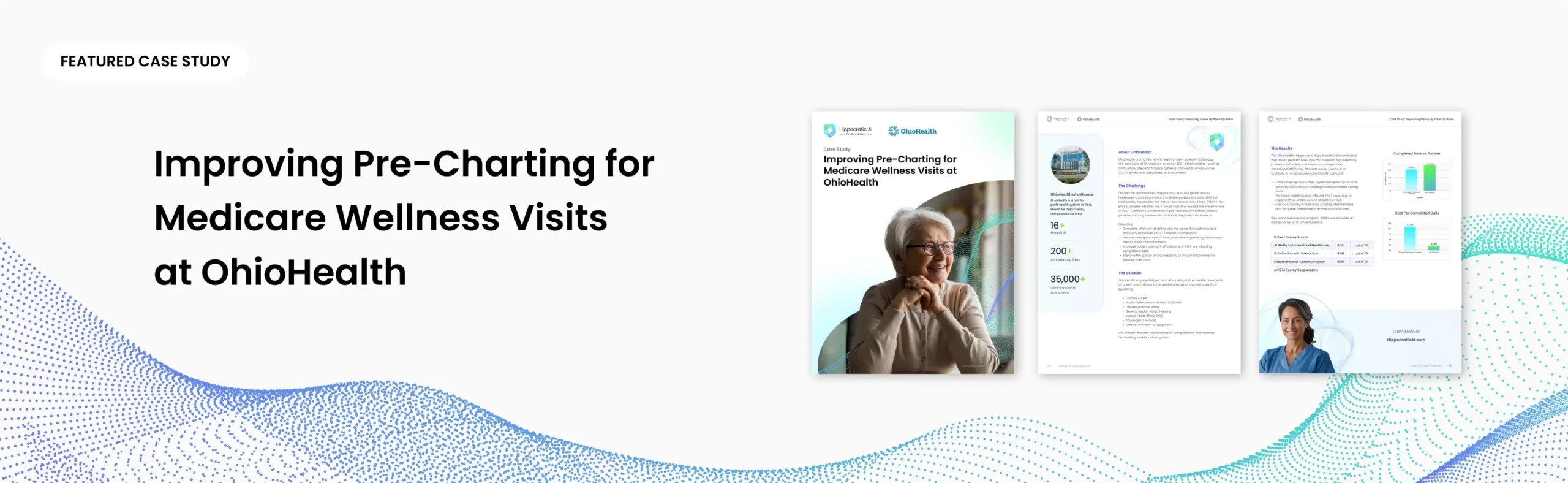
Case Study: Improving Pre-Charting for Medicare Wellness Visits at OhioHealth
Customer-facing case study of the OhioHealth Annual Wellness Visit program that also generated the fall-risk, functional-decline, and depression-screening manuscripts. Currently gated on the website. Two site issues to flag: the browser tab title on this page reads ‘Improving Follow Up Show Up Rates’, which does not match the case study, and the connect rate quoted...
Read Our Paper
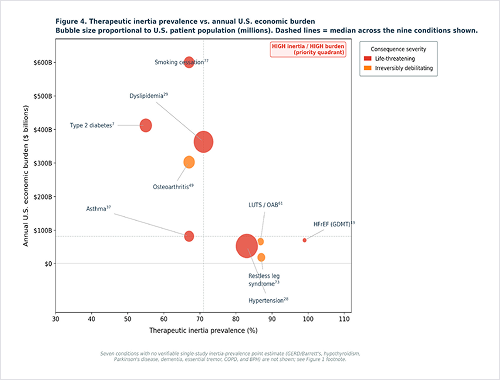
Therapeutic Inertia in Pharmacologic Dose Optimization: Prevalence, Clinical Consequences, and Economic Burden Across Sixteen Chronic Conditions
Failure to titrate medications to guideline-recommended target doses is widespread across sixteen chronic conditions and carries substantial clinical and economic costs.
Read More
Hidden Functional Decline: How Conversational Voice AI Detects Early Mobility and ADL Impairment in Older Adults with High Self-Rated Health
Nearly half of the older adults who described their own health as good or better showed two or more mobility or daily-living impairments when assessed by an AI care agent.
Read More
Transforming Healthcare AI Education Through Micro-Learning: A Novel Partnership Model for Nursing Workforce Development
An academic-industry partnership delivering 11 short AI courses to 478 nursing students and faculty produced measurable knowledge gains alongside satisfaction scores averaging 4.58 out of 5.
Read More
Multi-Call Memory in an AI Care Agent for Chronic Care Management Among Older Adults: Retrospective Observational Study
Each memory the AI care agent carried over from a previous call was associated with roughly 2.5 more minutes of conversation with older adults in chronic care management.
Read More
Using a Multilingual AI Care Agent to Reduce Disparities in Colorectal Cancer Screening for Higher Fecal Immunochemical Test Adoption Among Spanish-Speaking Patients: Retrospective Analysis
Spanish-speaking patients called by a multilingual AI care agent opted in to colorectal cancer screening at 2.6 times the rate of English-speaking patients.
Read More
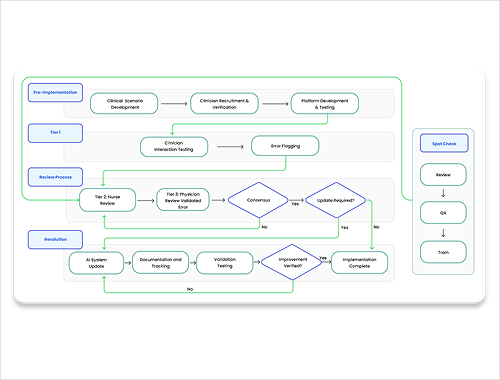
Real-World Evaluation of Large Language Models in Healthcare (RWE-LLM): A New Realm of AI Safety & Validation
When 6,234 licensed clinicians reviewed more than 307,000 real patient calls, the rate of clinically correct guidance rose from about 80% before Polaris to 99.38% under Polaris 3.0.
Read More